
PhDGOV Project Concludes Comprehensive In-Person Capacity Building Programme in Europe
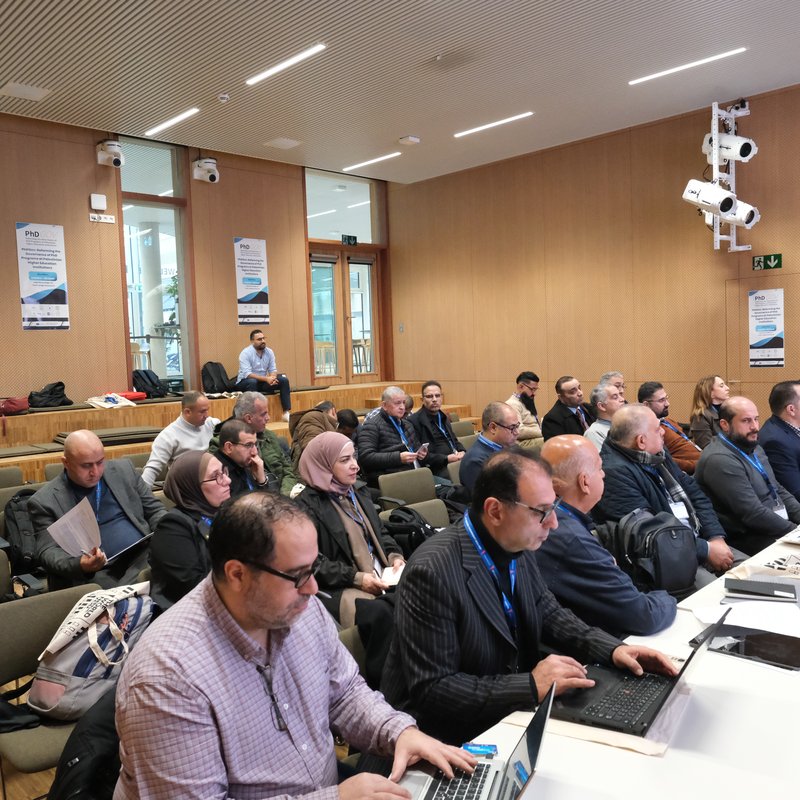
The PhDGOV project (Reforming the Governance of PhD Programs at Palestinian Higher Education Institutions), co-funded by the Erasmus+ Programme, has successfully concluded the in-person training workshop held in Brussels from 19–21 January 2026, hosted by Vrije Universiteit Brussel. The training brought together European higher education experts, representatives of Palestinian partner universities, and the Ministry of Education and Higher Education and the Accreditation and Quality Assurance Commission (AQAC) in Palestine to engage in structured discussions on doctoral education reform. Key themes included PhD governance structures, doctoral school models, supervision practices, quality assurance and assessment mechanisms, research ethics, academic integrity, and international funding opportunities.
A central outcome of the Brussels training was the development of institutional action plans, through which each Palestinian partner university identified priority areas and concrete steps to improve the governance of its PhD programmes. These action plans form a practical roadmap for translating the project’s capacity building activities into sustainable institutional reform.
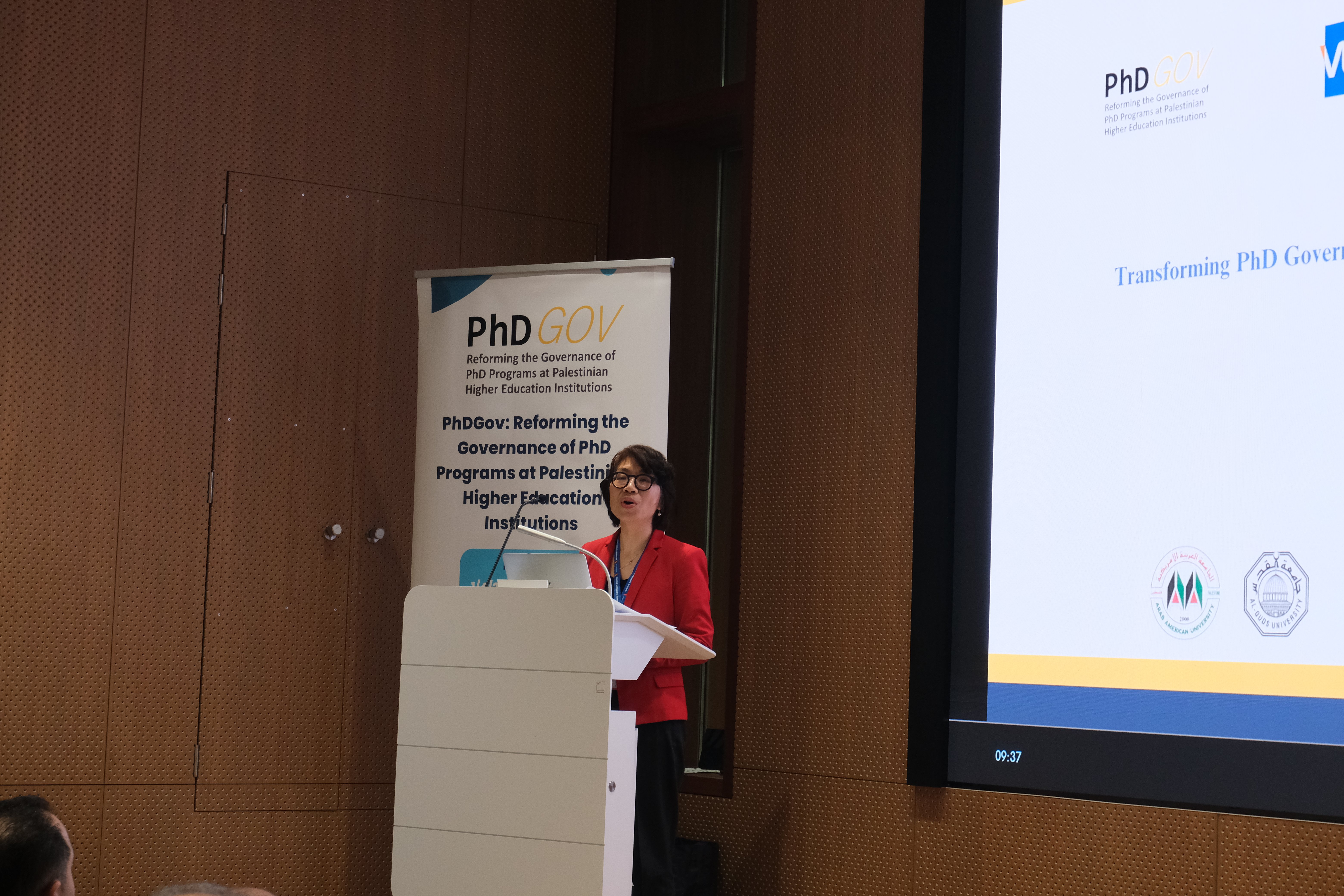
The in-person training was initiated on 19 January 2026 at the Learning Innovation Center of Vrije Universiteit Brussel (VUB).
Day 1 started with an opening session, including welcome remarks of the VUB and from the PhDGOV coordinator, and a presentation of the PhDGov Project. The session outlined the project’s overall objectives and set the context for the in-person training activities.
The main working session of the day focused on PhD program structures for Palestinian higher education institutions. Based on the results of Work Package 2 (WP2), participants took part in a needs-based design session, discussing current challenges and future directions for doctoral program structures in their home institutions. The session emphasized group discussion and shared reflection.
In the afternoon, participants continued with a session on PhD portfolios and academic responsibilities, covering topics such as academic activities, research outputs, and tasks during the PhD trajectory. This was followed by a session on supervisor profiles and practices, presenting VUB approaches to doctoral supervision and institutional support.
Day 1 concluded with a plenary feedback session, allowing participants to share reflections on the discussions and to prepare for the thematic focus of the following training days.
On 20 January 2026, the PhDGov in-person training continued at Vrije Universiteit Brussel in Brussels. Day 2 focused on doctoral school structures and quality assurance in PhD education. The morning session addressed doctoral school governance models, presenting structures and coordination mechanisms from VUB and European partner universities. The session encouraged comparative discussion on policies, services, and organizational arrangements relevant to doctoral education.
In the afternoon, the training continued with a session on assessment and quality assurance, covering PhD progress monitoring, evaluation procedures, and internal quality assurance processes. Participants discussed how assessment and quality assurance mechanisms are organized within doctoral education frameworks and reflected on their relevance for institutional contexts.
The day concluded with plenary feedback and discussion, allowing participants to summarize key points from the sessions and to exchange perspectives.
Day 3, 21 January 2026, focused on project progress, institutional action planning, and reflection. The morning session addressed project progress management and next steps, providing an overview of the ongoing implementation of the PhDGov project and outlining upcoming activities.
This was followed by a development action plan session, during which representatives from Palestinian universities worked on action plans for their home institutions. The session supported structured discussion on priorities for improvement and future actions related to PhD governance.
In the afternoon, participants presented their institutional action plans, followed by open discussion and exchange. The training continued with a session on learning results and key take-away messages, offering participants the opportunity to reflect on their learning experiences over the three days.
Through this comprehensive capacity building programme, participants gained comparative insights into diverse European doctoral governance models, strengthened their understanding of quality-driven PhD education, and enhanced their ability to design and implement institutional reforms aligned with national priorities and international best practices.
The successful completion of the capacity building programme represents a significant achievement for the PhDGOV project. The knowledge gained, partnerships strengthened, and action plans developed during this programme will directly inform the next phases of implementation, contributing to sustainable improvement of PhD governance and doctoral education in Palestinian higher education institutions.