
“MoEHE” Discusses the Governance and Quality of Doctoral Programs in Higher Education Institutions
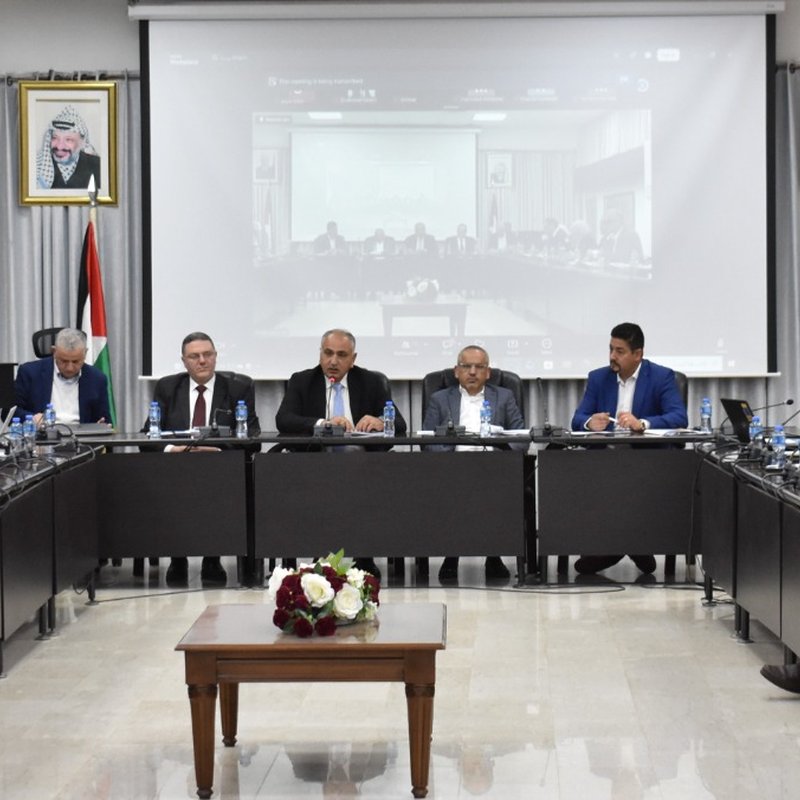
The Ministry of Education and Higher Education (MoEHE), through the National Accreditation and Quality Assurance Commission for Higher Education Institutions, organized today a national workshop on the governance and quality of doctoral programs in higher education institutions.
Prior to the start of the workshop, the Minister of Education and Higher Education, Prof. Amjad Barham, met with the project’s steering committee, where he expressed his appreciation for their efforts, emphasizing the importance of the project and the need to benefit from international expertise in improving doctoral programs.
During the opening session, the Deputy Minister for Higher Education, Dr. Basri Saleh, stated in his speech on behalf of Minister Barham that examining the current state of doctoral programs in Palestine reveals gaps that require practical solutions to enhance their quality.
Saleh pointed out that the Ministry is keen to involve various universities in this project, contributing to broadening participation and strengthening academic partnerships. He stressed that the project helps develop the capacities of Palestinian researchers and improve doctoral programs, noting that enhancing the pedagogical competencies of academic staff will positively impact the quality of higher education outcomes. He added: “We look forward to maximizing the benefits of this effort.”
He further affirmed that the project is based on an analytical study of the status of doctoral programs in Palestine and represents a national priority to ensure their advancement.
For his part, the President of the National Accreditation and Quality Assurance Commission for Higher Education Institutions, Dr. Muammar Shtayyeh, presented the key pillars of doctoral program governance, which include developing regulatory frameworks, enhancing the quality and ethics of scientific research, establishing a governance council for the programs, updating supervision and dissertation defense committee guidelines, and improving evaluation models.
In turn, the project coordinator, Dr. Sami Sader, explained that the doctoral program governance project in Palestinian universities (PhDGOV), funded by the Erasmus+ program, spans 36 months and aims to develop a comprehensive national framework for governing doctoral programs, strengthen their academic structure, and develop research-based educational models. The project also seeks to expand international cooperation with researchers and academic institutions, particularly in the European Union, and to enhance partnerships with the industrial sector.
Meanwhile, the Director of the Erasmus+ Office in Palestine, Dr. Amir Khalil, delivered a presentation on the Erasmus+ program and the projects supported by the European Union, emphasizing that these projects represent an important opportunity to strengthen research partnerships, build capacities, and enable higher and technical education institutions to benefit from initiatives that address national needs.
Khalil noted that the Erasmus+ Office maintains strategic relationships with governmental bodies and Palestinian universities, and over the past years has contributed to building partnerships with European universities, creating broad opportunities for academic exchange, with around 500 male and female students participating annually in exchange programs facilitated by the office.
Dr. Rashid Jiusi also presented a comparative study of doctoral programs in Palestinian institutions, addressing their current status, key gaps and challenges, and highlighting international models that could be adapted for local development.
The workshop included a panel discussion featuring a group of experts and academics: Dr. Samir Hanna, Dr. Ihab Qubbaj, Dr. Amjad Ratrout, Dr. Dirar Smadi, and Ms. Abeer Hamed. The session was moderated by Dr. Muammar Shtayyeh and involved an in-depth discussion on mechanisms for developing doctoral program governance, enhancing supervision and research quality, and aligning programs with national development needs.
The workshop concluded with a session dedicated to presenting recommendations, which focused on developing regulatory and legislative frameworks for doctoral programs, improving the quality of academic supervision, adopting modern evaluation practices, and expanding partnerships with international institutions and the industrial sector.